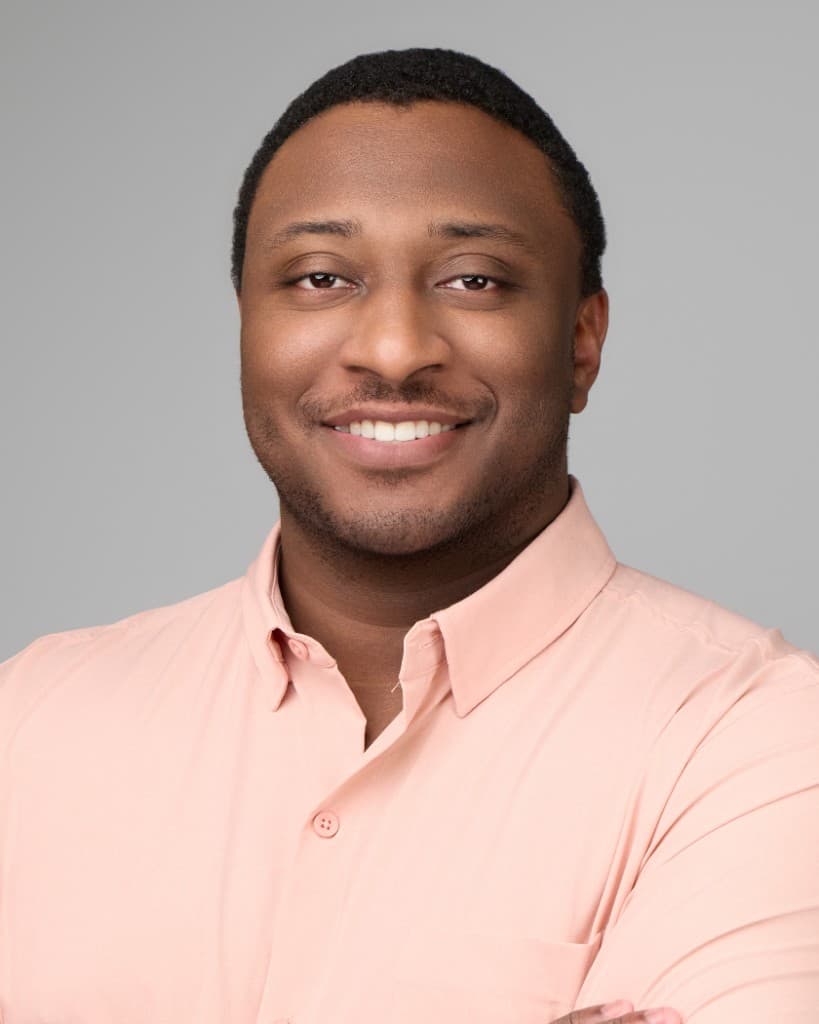
Background
I have tutored one-on-one for 17 years, supporting students who need a steadier pace, sharper problem-solving, or someone who can meet them at the level of the course they are actually in. Families often find me when a class moves too fast; college and graduate students find me when problem sets, labs, or thesis work start to pile up.
For the classes we work on together through a semester, students typically see meaningful gains — on average, about one to two letter grades by the end of the term. Outcomes depend on where you start, how often we meet, and the practice you put in between sessions; every student is different, but steady, course-aligned work is what produces those results.
Professional experience
Before and alongside tutoring, my work has stayed in STEM — analytics, energy, and sustainability:
- Nike — Lead analyst for global sustainability, material analytics, and supply chain resiliency; previously led analytics for global bookings and Asia-Pacific/Latin America distributor performance (Portland, OR; 2022–present)
- McKinstry — Business data analyst for energy and technical services branches — Power BI, SQL, and Tableau dashboards for operational and efficiency decisions
- Cadeo — Data science for market research and energy-efficiency program evaluation, including programs for Bonneville Power Administration and the Northwest Energy Efficiency Alliance
- Energy 350 — Strategic energy management and statistical modeling for commercial utility-scale efficiency programs across West Coast utilities
- Universities and municipalities — Sustainability consulting, greenhouse-gas inventories, emissions modeling, and CDP reporting for cities and utilities (St. Louis, Cincinnati, Phoenix, Milwaukee, and others); published utility and municipal emissions research
- Washington University in St. Louis — Student researcher in physical chemistry (novel transition-metal catalysis for CO₂ and nitrogen oxides); renewable energy program associate
That path is not separate from how I teach: I am used to translating messy, real-world problems into steps that make sense.
Education
- Master of Engineering, Environmental Energy and Chemical Engineering — Washington University in St. Louis (2017–2018)
- Bachelor of Arts, Mathematics (statistics concentration) — Washington University in St. Louis (2013–2018)
- Certificate, Renewable Energy and the Environment — Washington University in St. Louis (2016–2017)
At WashU I received the Summer Undergraduate Research Award (MARC USTAR) for undergraduate research.
My statistics training shows up in how I teach probability, data, and lab analysis; my engineering background shows up in how I teach physics, chemistry, and applied math. For data-heavy coursework I draw on R, Python, and SQL alongside pen-and-paper problem solving.
How I teach
- Start from what you know — we connect new ideas to math and science you have already seen.
- Match your course — notation, exam style, and pacing follow your class, not a generic workbook.
- Build habits — not just answers, but how to study and check your own work between sessions.
- STEM writing when it matters — lab reports, methods and results, and technical drafts (not general proofreading).
Who I work with
Students from K–12 through PhD in math, physics, chemistry, computer science, engineering, and statistics. Online sessions are available anywhere (live video; timezone and meeting link confirmed after you apply). In-person sessions are available in the Greater Portland, OR metro — at home, a library, or another agreed location — on a schedule we confirm after you apply.
See courses for topic outlines by level and pricing for current rates.
Beyond tutoring
When I am not teaching or working with data, you will often find me in the air or on the water. I am an instrument-rated private pilot (Restricted Radio Operator — Aeronautical), and I sail when I can — with marine radio, radar endorsement, and coastal navigation credentials. Both take planning, calm under pressure, and respect for systems that have to work the first time. I bring that same mindset to sessions: prepared, patient, and focused on getting you to a place where the material feels manageable on your own.